
Since the first Industrial Revolution, our social contract has rested on a simple transaction: humans trade a portion of their freedom for a wage. It was within this crucible that the modern company was forged, a legal entity designed to produce goods and services, balance its books, and, ultimately, generate profit.
In this model, the human being has long been considered as an indispensable "resource", a workforce necessary for the production.
However, the definition of a company is changing. A new dimension has emerged: Corporate Social Responsibility (CSR). Initially voluntary and rather marketing, it is gradually becoming tougher under legislative pressure (such as the CSRD directive in Europe), forcing companies to integrate social and environmental issues into their quest for profit. But will this emerging "awareness" of the company be enough to protect humans in the face of the technological upheaval that is coming?
The productivity paradox
Economic history has taught us a lesson that has remained true for two centuries: technology increases productivity. During the three previous industrial revolutions, our ability to produce by no one exploded. Yet, as the graph below shows, while the working time has decreased over two centuries, it has not fallen in proportion to these immense gains.
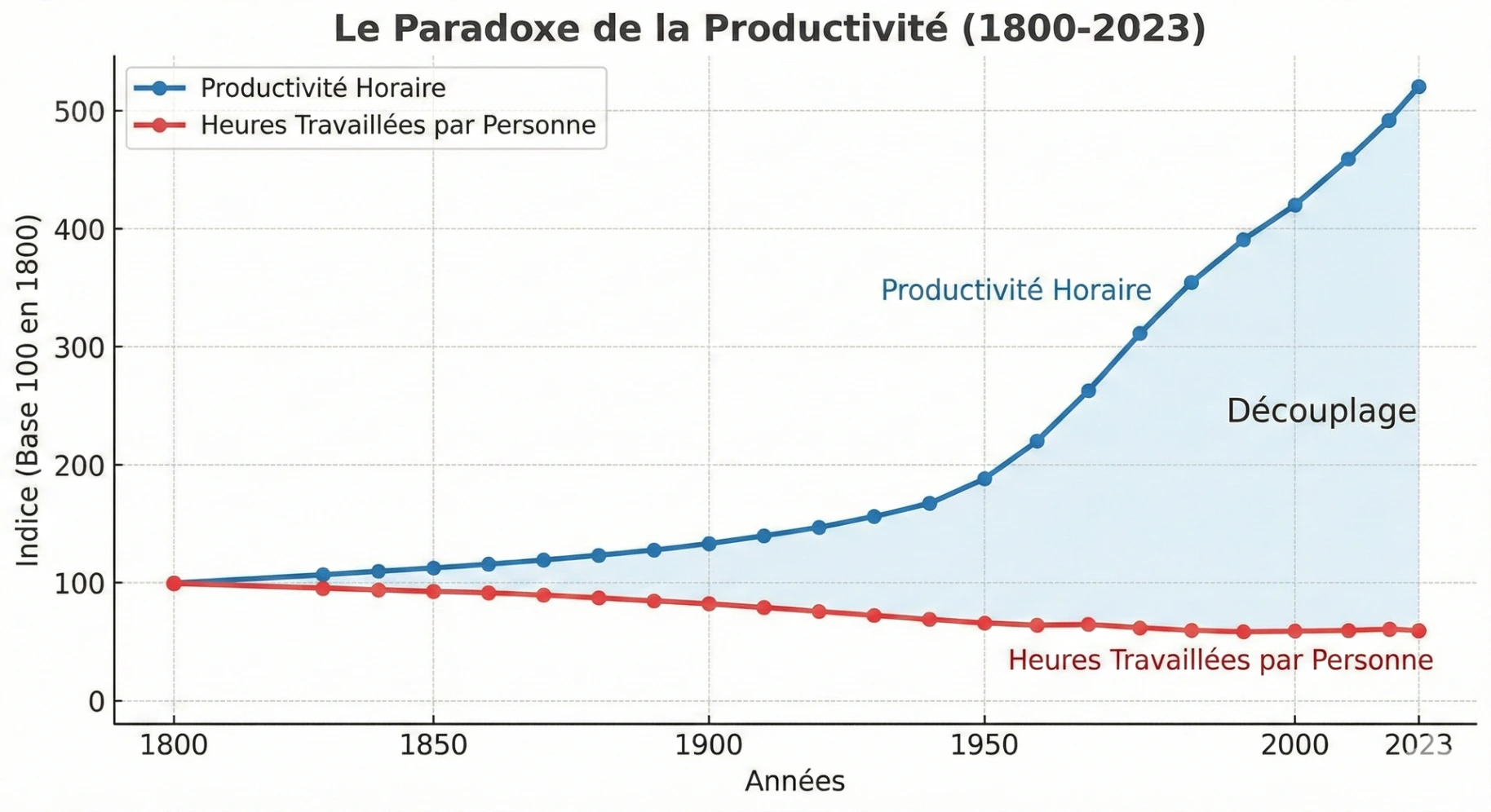
Why this "decoupling"? Because every innovation has created new needs, thus absorbing the gains of productivity and the workforce freed up. We have chosen consumption rather than free time.
But this historical balance is threatened. A major technological breakthrough is about to break this well-oiled mechanism.
The disruption of AI: why this time it's different
Artificial intelligence and advanced robotics promise to massively replace jobs. The major difference with the past is the nature of this replacement. Robotics replaces manual work, while AI replaces intellectual work, from the simple employee to the manager.
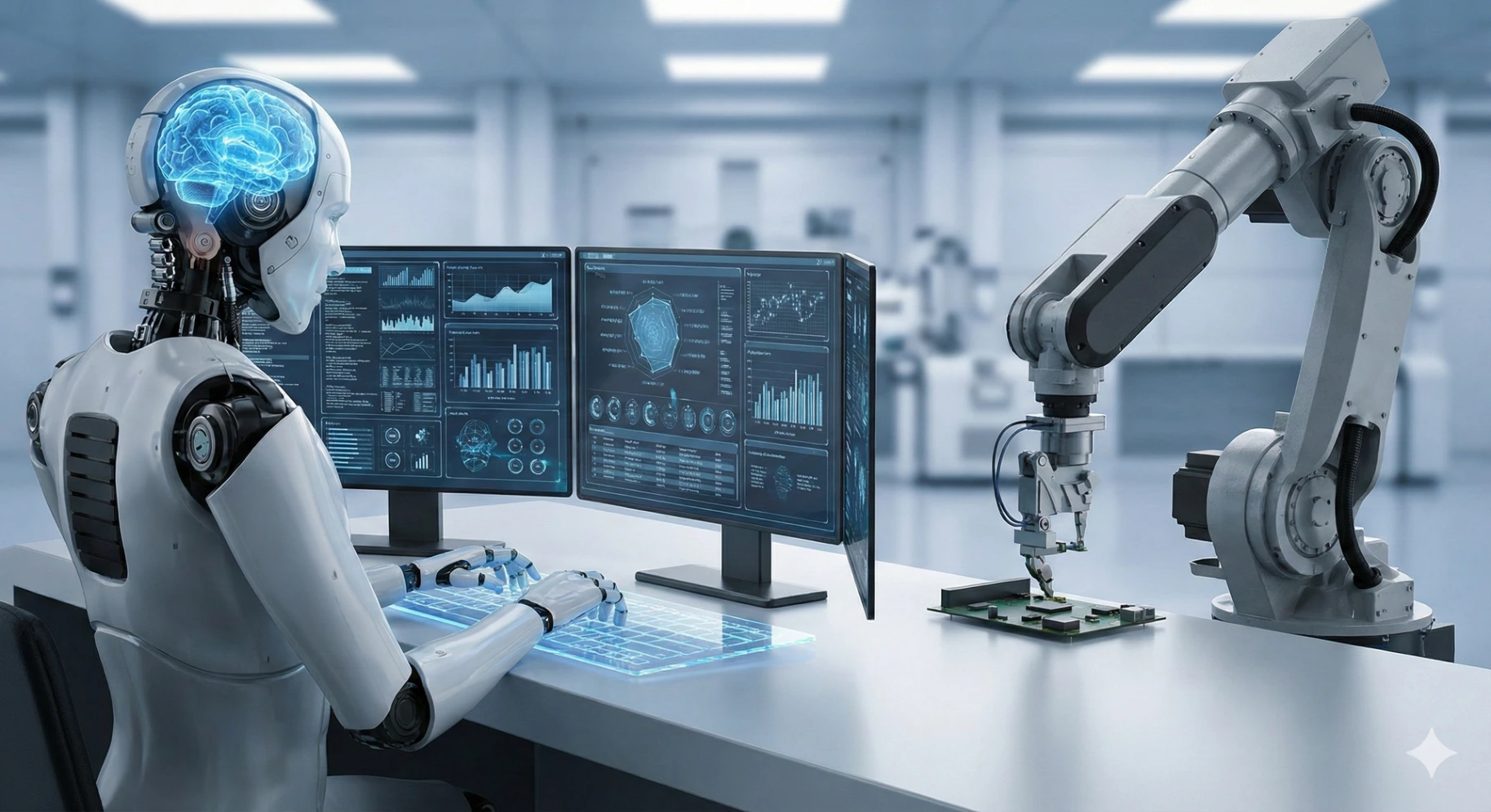
This is the end of the phenomenon of "spillage". Previously, the jobs that had been destroyed were replaced by new jobs. Tomorrow, every new job created could be instantly filled by a more efficient AI. We risk breaking the virtuous circle: more new needs for mankind, and therefore more new jobs.
2076: scenarios for a world without work
Let's project ourselves 50 years into the future. The year is 2076. Businesses have become autonomous AI entities trading between them. In this context, the place of man and capitalism must be completely redesigned. Three scenarios are emerging:
1. The utopia of utilitarianism and functionality
If the company no longer fulfils its social function as a provider of jobs, it could be transformed into a pure utilitarian entity. This shift would signal the end of the consumer society as we know it, where companies compete fiercely to push for the consumption via increasingly attractive products. It would also be the End of the dogma of continuous growth: the need to always produce more would disappear in favor of the "just necessary". We would enter then in the era of reasoned consumption.
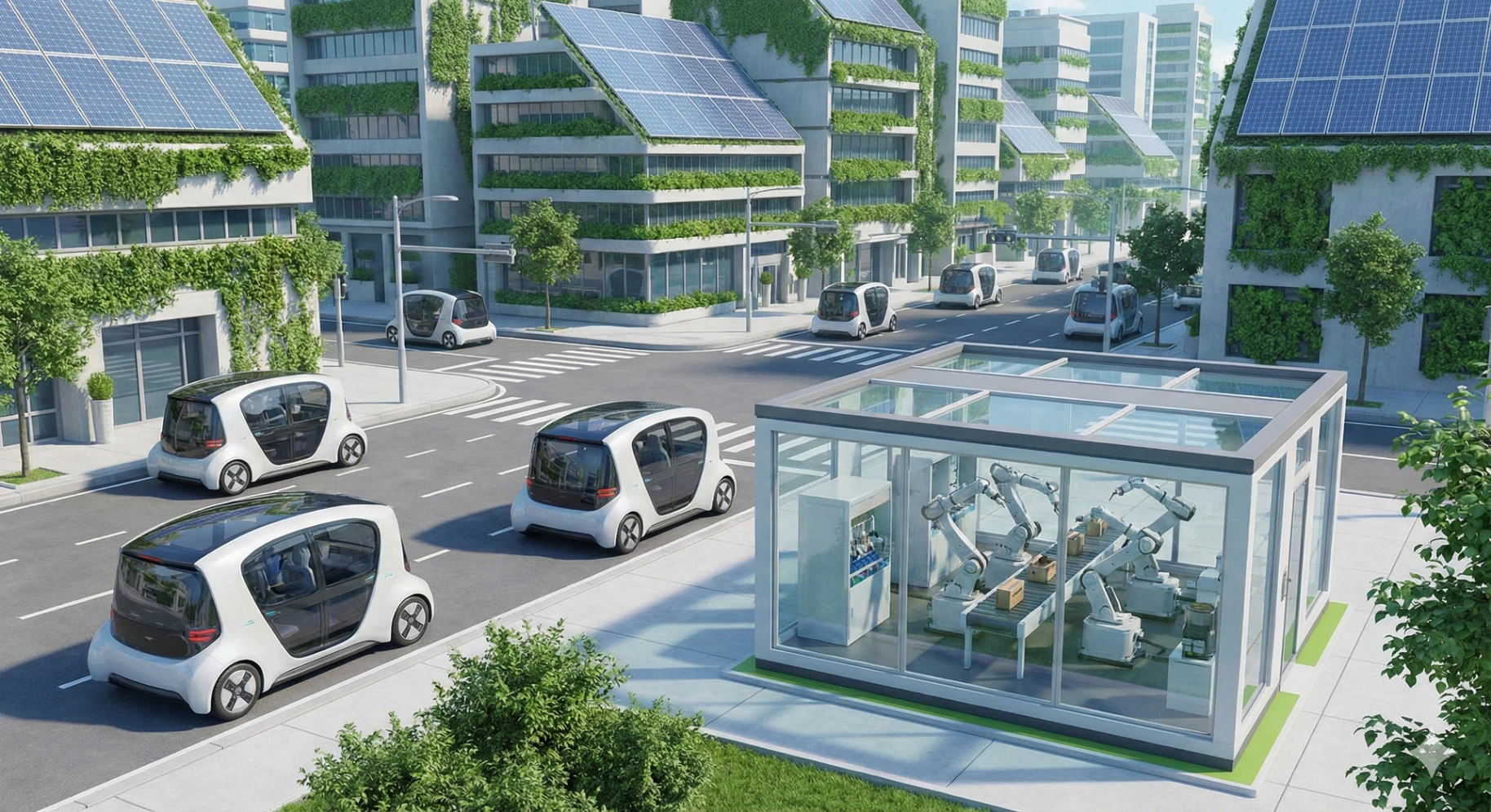 In this context, the notion of property is fading in favor of of use. As production costs are harmonized worldwide (an AI would cost the same everywhere in the world), this would encourage massive relocation via small automated production units, located as close as possible to needs, drastically reducing the logistical footprint.
2. Oligarchic dystopia
This is the scenario of the forced maintenance of current capitalism. Here, capital and the means of production (fleets of robots and AI) do not are not redistributed but remain concentrated in the hands of a tiny minority. This elite dictates its rules, while the masses, who have become useless economically, survives on the margins. It is a breeding ground fertile for extreme social tensions, or even scenarios insurrectionary often covered by literature and cinema in dystopian science fiction.
3. The redistributive state
To avoid the collapse of a system where no one can consume for lack of wages, the State could massively tax the automated production to redistribute a universal income. Money circulates, but the link between work and income is definitively broken.
Conclusion: the new role of the company
The transition to this future will be long and frictional. We will not move overnight to "all automated". The major risk is a period of high instability where unemployment explodes without redistribution mechanisms are still in place, creating a Divide between those who are still working and those excluded from the world of work.
This is where the role of the company must be redefined. If The inevitable direction is that of total automation, the company will not can no longer be satisfied with seeking profit. His ultimate responsibility becomes to support this transition. It must act as a social shock absorber, ensuring that the replacement of human labour is not synonymous with precariousness, but liberation.
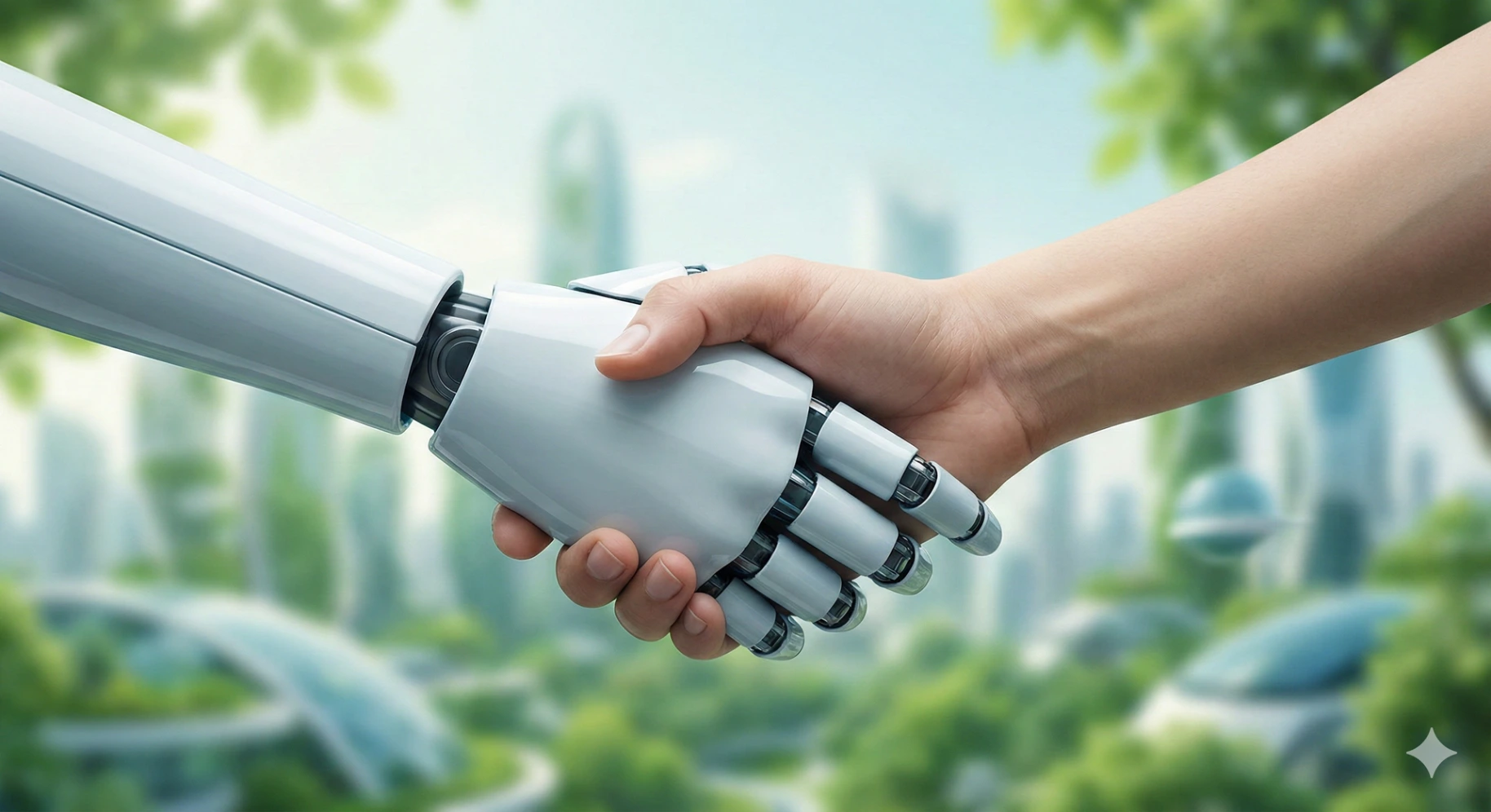
The goal must be a transition that is as painless as possible possible for the populations. If we can do that, we will be able to answer the real question that awaits us: in a world freed from work, what will be the new "raison d'être" of humanity?